
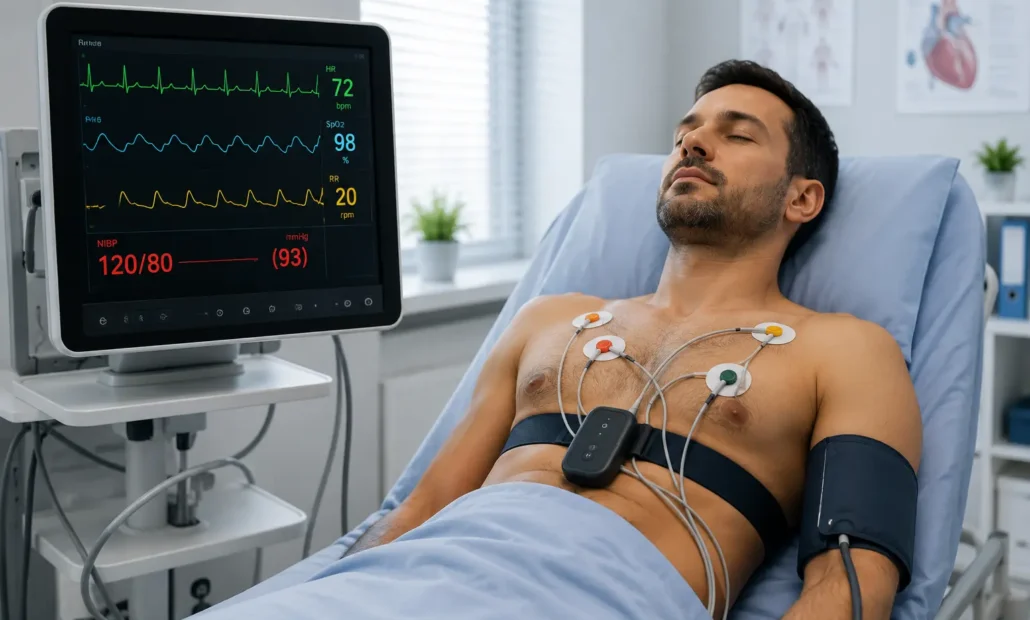
Capturing Every Beat That Matters
Heart rhythm monitoring uses lightweight, wearable devices to continuously record your heart’s electrical activity during your everyday life. This is essential for detecting irregular heartbeats, arrhythmias, and rhythm disturbances that may not appear during a brief office visit. We offer both short-term (24–48 hour Holter) and extended (up to 30-day) monitoring options to capture even the most infrequent symptoms.
If you’re experiencing palpitations, dizziness, or unexplained fainting, heart rhythm monitoring can provide the answers you need. Schedule your consultation and let us find the cause.
- Detects irregular heartbeats that occur outside the clinic during daily activities and sleep
- Extended monitoring captures rare symptoms that happen days or weeks apart
- Small, discreet devices that you wear comfortably during normal routines
Book Appointment
Expert Consultation
Advanced Diagnosis
Key Benefits of Heart Rhythm Monitoring
Many arrhythmias are intermittent and unpredictable — a standard EKG captures only a few seconds of heart activity and may miss them entirely. Ambulatory monitoring records your heart rhythm continuously over days or weeks, dramatically increasing the chance of capturing the episode that’s causing your symptoms. This leads to faster, more accurate diagnoses and targeted treatment.


Frequently asked question
A Holter monitor records continuously for 24–48 hours. Extended monitors can record for up to 30 days and are ideal for symptoms that occur infrequently — even once every few weeks.
Most modern monitors are water-resistant and designed for daily activities. We will provide specific instructions based on the device used. Generally, you can continue your normal routine.
Common reasons include heart palpitations, racing heartbeat, dizziness, lightheadedness, unexplained fainting, or a previous inconclusive EKG. Your doctor may also recommend monitoring if you have a family history of arrhythmias.