
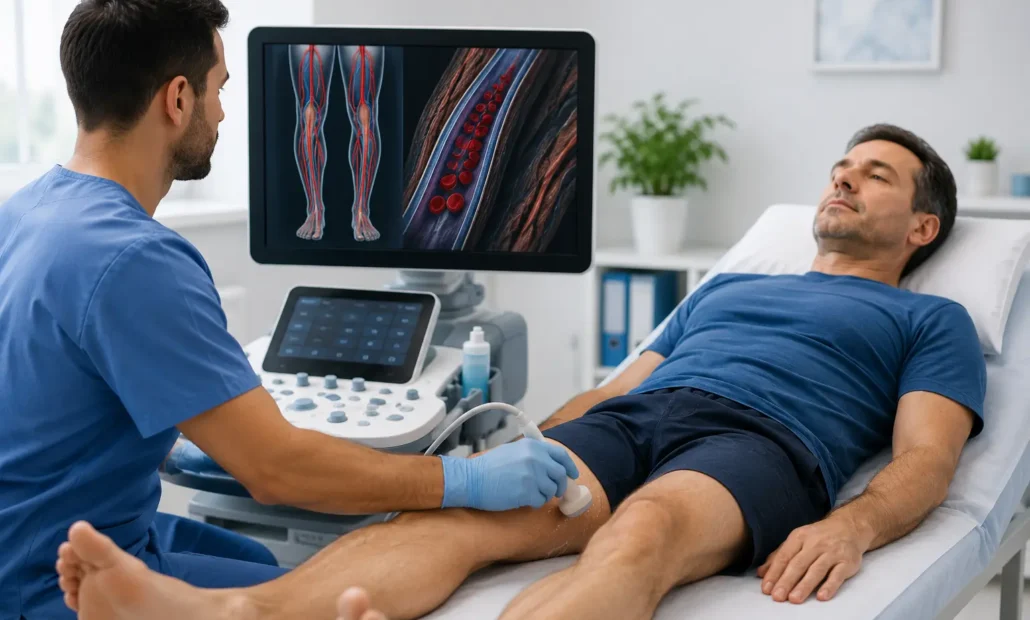
Assessing Your Circulation and Vascular Health
Vascular diagnostics involves non-invasive testing to evaluate blood flow through your arteries and veins. These studies help detect peripheral artery disease, deep vein thrombosis, carotid artery narrowing, and other conditions that affect circulation and increase cardiovascular risk. Testing is painless, requires no special preparation, and provides results that directly inform your treatment plan.
Vascular health is an essential part of your overall cardiovascular picture. Schedule your vascular evaluation and gain a complete understanding of your circulatory health.
- Non-invasive ultrasound-based testing with no radiation or needles
- Screens for peripheral artery disease, DVT, carotid stenosis, and aortic aneurysm
- Critical for stroke prevention and early detection of circulatory problems
Book Appointment
Expert Consultation
Advanced Diagnosis
Key Benefits of Vascular Diagnostics
Vascular disease often develops silently — many patients have no symptoms until a serious event like a stroke or blood clot occurs. Routine vascular screening can identify narrowed arteries, poor circulation, and blood clot risk before they become emergencies. Early detection means earlier intervention and significantly better outcomes.


Frequently asked question
Vascular testing can detect peripheral artery disease (PAD), deep vein thrombosis (DVT), carotid artery stenosis (stroke risk), abdominal aortic aneurysm, renal artery narrowing, and chronic venous insufficiency
Screening is recommended for patients with leg pain while walking, swelling in the legs, a history of smoking, diabetes, high blood pressure, or a family history of vascular disease. Men aged 65–75 who have ever smoked should be screened for aortic aneurysm
Most vascular studies take 20 to 45 minutes depending on the type of test. There is no recovery time, and you can resume normal activities immediately.