
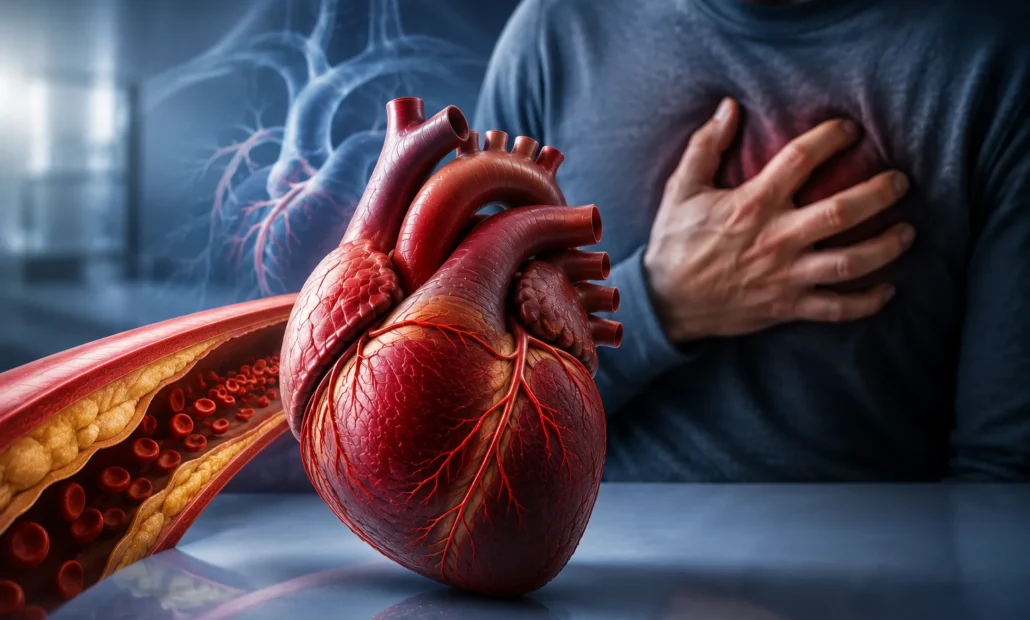
Expert Evaluation and Treatment of Coronary Artery Disease
Coronary artery disease (CAD) occurs when the arteries supplying blood to your heart become narrowed or blocked by plaque buildup. Our cardiology team provides comprehensive evaluation and treatment for patients with known or suspected CAD — including chest pain evaluation, risk factor management, medication optimization, and coordination of interventional procedures when needed.
Chest pain should never be ignored. If you are experiencing acute chest pain with shortness of breath or sweating, call 911. For non-emergency evaluation, schedule an appointment today.
- Thorough evaluation of chest pain to determine cardiac vs. non-cardiac causes
- Evidence-based risk factor management including cholesterol, blood pressure, and lifestyle modification
- Interventional cardiology expertise for patients requiring catheter-based procedures
Book Appointment
Expert Consultation
Advanced Diagnosis
Key Benefits of Coronary Artery Disease & Chest Pain
Coronary artery disease is the most common form of heart disease and a leading cause of heart attacks. Early detection and aggressive risk factor management can halt disease progression, improve symptoms, and significantly reduce the risk of heart attack. Our cardiology team training in interventional cardiology at Tufts Medical Center provides the full spectrum of evaluation and treatment — from prevention to intervention.


Frequently asked question
Common symptoms include chest pain or pressure (especially with exertion), shortness of breath, fatigue, and pain radiating to the jaw, neck, shoulder, or arm. However, some patients have no symptoms at all, which is why screening is important for those with risk factors.
Diagnosis may involve a combination of stress testing, cardiac imaging, blood work, and in some cases cardiac catheterization. Dr. Saad will recommend the most appropriate diagnostic approach based on your symptoms and risk profile.
While existing plaque cannot always be fully reversed, aggressive management of risk factors — including cholesterol reduction, blood pressure control, exercise, and dietary changes — can stabilize plaque, improve blood flow, and significantly reduce the risk of heart attack.